Sequence to Meeting Conversion Rate: Benchmarks and How to Improve It
December 11, 2025 · 4 min read · by Ahmet Faruk Yilmaz, Founder of Asphia
TL;DR
Sequence-to-meeting rates vary by audience, offer, market, and measurement. Use any 1% to 3% range only as an illustrative planning assumption, then compare your sequence with a defined baseline and document the denominator.
Most outbound teams measure opens and replies. The useful question is simpler: what share of the people you contact end up on a call? Sequence to meeting conversion rate connects outbound activity to revenue.
A 1% to 3% range can be used as an illustrative planning assumption, not a guarantee. Define the denominator and qualification rule, then investigate list quality, deliverability, copy, offer, and timing when results differ.
Why Benchmarks Vary So Widely
Aggregate benchmarks mean little without context. A 2% conversion rate for a niche professional services firm selling a six-figure engagement is not the same outcome as 2% for a SaaS tool with a free trial. Three variables account for much of the difference:
Audience size and specificity. Tighter lists may improve conversion when the audience and offer are a fit, but this is a hypothesis to test against a broader baseline. Compare a documented sample of closely matched companies with a larger, looser segment before drawing a conclusion.
Channel mix. Email-only sequences face more noise. Adding a LinkedIn connection request or profile view increases visibility and signals genuine interest.
Average contract value. Buyers considering larger commitments respond to different triggers and require more touchpoints. Lower-ACV products can afford shorter sequences with sharper calls to action.
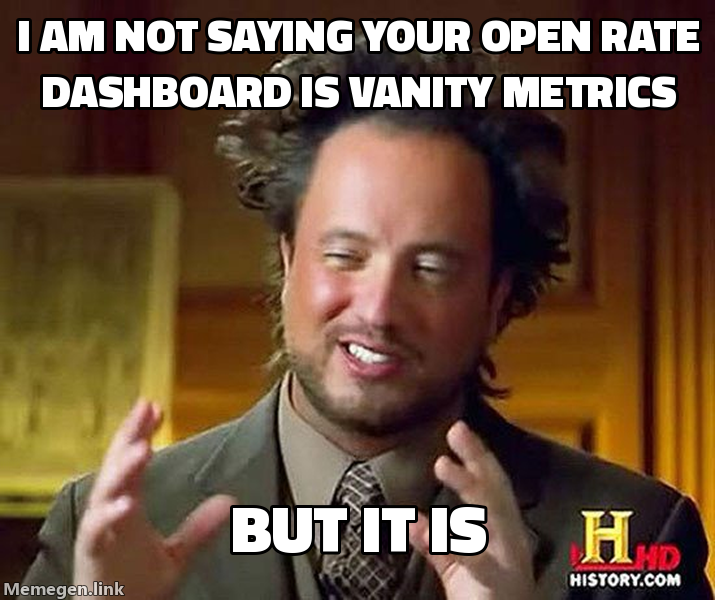 Opens tell you about subject lines. Only meetings tell you whether your sequence is actually working.
The meeting rate is the only outbound metric that cannot be gamed by tweaking a subject line.
The Three Levers That Move Your Rate
The three main variables affect different parts of the funnel:
| Lever | What it affects | Warning sign |
|---|---|---|
| List hygiene and verification | Deliverability, bounce rate, sender reputation | Bounce rate above 3-5% |
| Trigger-based personalization | Open rate, reply rate, meeting rate | First line starts with “I” or “We” |
| Call to action clarity | Reply rate, meeting conversion | Ask is vague or asks for too much too soon |
1. List hygiene and contact verification
Bounce rates above 3% to 5% damage sender reputation over time and can suppress open rates for valid contacts. Verify every email before launching a sequence. Check catch-all domains separately because many addresses on them do not exist.
One-time verification is not enough. Contacts go stale fast, especially in the roles outbound teams target most: VP, Director, and Head of. Adding Clay enrichment to the list-building process keeps data current and reduces bounce risk throughout the campaign.
2. Trigger-based personalization
Sequences that open with a specific, recent reason for contact convert better than those based on firmographic fit alone. Buyers receive dozens of generic sequences. Better messages point to something real: a funding announcement, a recent hire that signals a new initiative, a competitor the prospect just left, or a job posting that reveals a problem.
That is the difference between signal-based outbound and spray-and-pray. Referencing something that happened at the prospect’s company in the past thirty days gives the rest of the email a reason to be read.
The managed outbound service and done with you outbound pages explain how Asphia turns this approach into a repeatable system.
3. Call to action clarity
A vague or demanding ask kills conversion even when the rest of the email works. “Would love to connect and explore synergies” is not a call to action. “Are you the right person to talk to about X, or should I reach someone else on your team?” is. So is: “I have fifteen minutes open on Thursday if you want to see how we handle Y.”
The ask should be specific, low-friction, and matched to where the prospect is in their buying process. Cold prospects are not ready to commit to a demo with procurement. They are willing to spend fifteen minutes on a focused call about a problem they already recognize.
What a High-Converting Sequence Actually Looks Like
A sequence that converts at or above 2% typically has these structural characteristics:
- Four to six steps over ten to eighteen business days
- Step one: personalized email anchored to a specific signal, short body, one ask
- Step two (day three to four): a LinkedIn connection request or profile view, no message
- Step three (day six to eight): a follow-up email that adds a new angle or a relevant piece of proof
- Step four (day twelve to fifteen): a short “should I close your file” email that gives the prospect an easy out while surfacing any latent interest
- Optional step five: a final brief note, sometimes on a different channel
Each touchpoint should earn the next one, not close the sale.
Tracking and Improving Over Time
Measure conversion by cohort so you can identify what changed when the rate moves. Group sequences by list source, persona, and time period. B2B appointment setting operations improve over time only when this measurement is consistent.
Split test one variable at a time: subject line, opening line, call to action. Changes in copy produce noisy results over small sample sizes. Give each variant at least two hundred sends before drawing conclusions.
Teams that consistently reach the top of the benchmark range treat outbound as a system with measurable inputs, not an exercise in instinct.
Request the signal tier list.
A practical view of how we rank observable signals before outreach. We review each request for fit and may reply by email; delivery is not automatic.
By submitting, you agree to processing described in our Privacy Policy.
Your request was submitted. If it is a fit, we may follow up by email.
One more step: send the prepared request to [email protected]
FAQ
What is a good sequence to meeting conversion rate?
Some practitioners use 1% to 3% as an illustrative planning range, but it is not a universal benchmark. Report the audience, period, denominator, channel mix, and qualification rule, then compare your sequence with a relevant baseline.
Why is my email sequence not booking meetings?
The usual causes are emails landing in spam, broad targeting that misses the right persona, generic copy that ignores the prospect's problem, and unverified contact data that produces bounces. Fix the list and personalization before increasing volume. More volume on a broken sequence only damages sender reputation faster.
How many touchpoints does it take to book a meeting from cold outreach?
Four to eight touchpoints over two to three weeks can be a starting hypothesis, not a universal rule. Measure meetings by touchpoint and compare single-channel, multichannel, and shorter variants; audience, timing, and consent expectations affect the result.
Does personalization actually improve sequence conversion rates?
Relevant personalization may help, but results vary. Test sequences that mention a specific trigger against a generic baseline and report the audience, period, denominator, and measurement method instead of relying on unnamed practitioner claims.
How should I test sequence length?
Compare sequence lengths using meetings per contacted prospect and a defined qualification rule. A four-step and a ten-step variant may behave differently by audience, timing and channel; document the denominator and stop conditions rather than assuming a six-to-eight-step threshold.
What role does technical deliverability play in sequence conversion rates?
Deliverability sets the conditions for a fair comparison. Reported opens alone cannot establish meeting potential because tracking can be noisy; compare verified delivery, qualified replies, and meetings. Warmed inboxes, sending domains authenticated with SPF, DKIM, and DMARC, and low bounce rates come before copy optimization.

Ahmet Faruk Yilmaz
Founder of Asphia. He builds and runs signal-based B2B outbound engines for lean teams, and writes about cold email, Clay, deliverability, and GTM engineering.
Want this run for you?
Get a free GTM analysis. We show you the exact engine we would build.
Request the planning framework →