The 7 Outbound Metrics That Actually Predict Pipeline (And 5 That Don't)
June 3, 2026 · 5 min read · by Ahmet Faruk Yilmaz, Founder of Asphia

TL;DR
The outbound metrics that predict pipeline are reply rate, positive reply rate, meeting-held rate, sequence-to-opportunity rate, cost per opportunity, time-to-first-reply, and deliverability rate. Open rate, sent volume, LinkedIn connection rate, click rate, and unsubscribe rate are largely vanity numbers that tell you little about revenue impact.
Most outbound teams are measuring the wrong things. They celebrate send volume, chase open rates, and panic about unsubscribes, while the numbers that actually predict closed revenue sit ignored in a spreadsheet nobody opens.
The short answer: track reply rate, positive reply rate, meeting-held rate, sequence-to-opportunity rate, cost per opportunity, time-to-first-reply, and deliverability rate. Everything else is noise until you have those seven dialed in.
The 7 Metrics That Actually Predict Pipeline
1. Deliverability rate
Before anything else, confirm your emails are reaching inboxes. Aim for 90% or higher inbox placement across your sending domains. Poor deliverability quietly kills campaigns because all downstream metrics look terrible for no visible reason. Check sending domain reputation, warm up new mailboxes gradually, and monitor bounce rates weekly.
2. Reply rate
Total replies divided by total emails sent. This is your first real signal that your messaging resonates. A well-targeted campaign with a specific, relevant angle should produce replies. If reply rate is below 1%, the problem is usually deliverability, list quality, or an offer that does not match the audience. This metric tells you whether the message is landing at all.
3. Positive reply rate
This is the metric most teams underweight. Filter out out-of-office auto-replies, unsubscribes, and angry responses. Count only replies that show genuine interest: a question about your offer, a request for a call, a referral to the right person. Positive reply rate is the true engagement signal and the number your managed outbound service should be accountable for.
4. Meeting-held rate
Booked meetings mean nothing if the prospect does not show up. Track meetings held divided by meetings booked. A low held rate often points to weak pre-call qualification or too much time between booking and call. Strong signal-based targeting (linking your outreach to a recent trigger, a new hire, a funding announcement) tends to improve held rates because the prospect had a specific reason to engage.
5. Sequence-to-opportunity rate
How many contacts who entered a sequence became a qualified sales opportunity? This metric bridges outbound activity to pipeline value and is the one your revenue leadership actually cares about. It requires clean CRM hygiene but is worth the investment. If this number is low despite decent reply rates, the problem is usually in the qualification conversation, not the outbound itself.
6. Cost per opportunity
Total outbound spend, including tools, data, and labor, divided by opportunities created. This is the metric that lets you compare outbound against other acquisition channels and make resourcing decisions. A fractional SDR service or agency model should be able to show you this number clearly. If they cannot, ask why.
7. Time-to-first-reply
How long does it take from first contact to the first meaningful response? This metric helps you tune follow-up cadence. If most positive replies come after step three or four of a sequence, cutting your sequence to two steps is losing you pipeline. Time-to-first-reply gives you sequence design data grounded in real behavior rather than intuition.
The 5 Metrics That Do Not Predict Pipeline
Open rate is broken. Email security scanners and Apple Mail Privacy Protection fire tracking pixels automatically. Open rate inflation is real and well-documented. Use reply rate as a proxy for engagement instead.
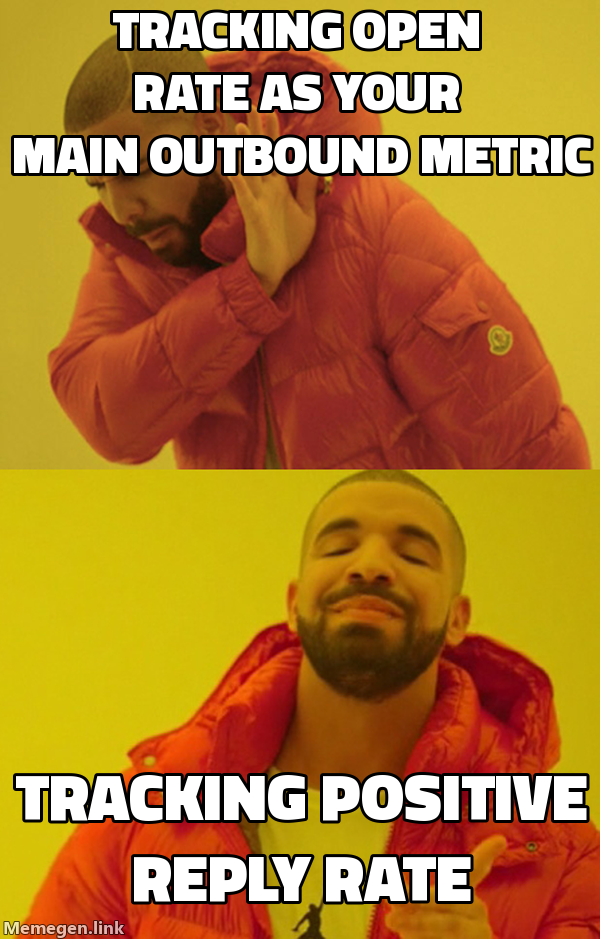 Your open rate is mostly bots. Your positive reply rate is your business.
Total sent volume measures effort, not effectiveness. Sending 10,000 emails to a poorly targeted list produces less pipeline than 500 emails to a precisely filtered, signal-enriched list. Volume obsession is a sign of a team that has not yet found product-market fit in its messaging.
LinkedIn connection acceptance rate sounds meaningful but varies too much by industry, seniority level, and message timing to be actionable on its own. Track it, but do not optimize for it in isolation from what happens after the connection.
Click rate on cold email measures almost nothing useful. Cold emails with links get filtered more aggressively by spam systems. Removing links and driving replies instead of clicks typically improves deliverability and reply rate simultaneously. If you are tracking click rate on cold outbound, you may be building the wrong type of email.
Unsubscribe rate matters for compliance monitoring, not for campaign optimization. A low unsubscribe rate on a badly targeted campaign just means people are ignoring you silently instead of clicking a link. It tells you nothing about whether your outreach is working.
How to Set Up Clean Outbound Reporting
The minimum viable reporting stack is a sending tool with reply tracking, a shared log for booked and held meetings, and a CRM or spreadsheet that maps contacts to opportunities and revenue.
For GDPR-compliant cold email operations, you also need an audit trail showing consent basis (legitimate interest) and suppression list management, but these are compliance records rather than performance metrics.
Clay enrichment combined with intent signals lets you segment your outbound list by trigger type, which makes your reporting more actionable. Instead of “reply rate across all campaigns,” you can compare “reply rate on funding-trigger outreach vs. reply rate on job-change outreach” and allocate effort accordingly.
If you are building this yourself, the Google Postmaster Tools dashboard (free, for Gmail delivery monitoring) and your sending tool’s domain health view are the two deliverability checks you should open before every campaign review.
The teams that consistently build outbound-driven pipeline are not sending more. They are measuring better, targeting tighter, and iterating on the seven numbers above until each one compounds. Volume follows clarity, not the other way around.
Get the signal tier list in your inbox.
We rank signals from S to D to decide who gets a cold email and who does not. You get the list once. No follow-up emails.
Request received. The list lands in your inbox within 24 hours.
One more step: send the prepared request to [email protected]
FAQ
What is a good reply rate for cold email outbound?
A healthy cold email reply rate for well-targeted, signal-based campaigns lands in the low-to-mid single digits as a share of sends. A strong result reflects good list quality and relevant messaging. A very low reply rate usually points to a deliverability problem, a weak offer, or a mismatched audience.
How do I measure outbound reporting metrics without a CRM?
Track reply rate and positive reply rate inside your sending tool, log booked meetings in a shared spreadsheet, and calculate cost per opportunity manually from your tool costs divided by opportunities created. A lightweight Notion or Airtable database works well before you have a full CRM in place.
What is the difference between reply rate and positive reply rate?
Reply rate counts every response including out-of-office messages, unsubscribes, and angry replies. Positive reply rate counts only responses that show genuine interest such as asking for more info, requesting a call, or referring you to the right person. Positive reply rate is the number that actually correlates with pipeline.
Why is open rate a misleading outbound metric?
Apple Mail Privacy Protection and various security scanners fire tracking pixels automatically, inflating open rates substantially across most lists. A high open rate on a cold email campaign often reflects bots, not human interest. Use reply rate as a proxy for engagement instead.
How often should I review outbound metrics?
Review deliverability rate and reply rate weekly during an active campaign. Review positive reply rate, meeting-held rate, and cost per opportunity monthly. Sequence-to-opportunity rate should be evaluated per campaign cohort, not in real time, because it lags behind by several weeks.
What outbound metric should I optimize first?
Start with deliverability rate. If your emails are landing in spam, no other metric matters. Once deliverability is above 90% inbox placement, optimize for positive reply rate through better targeting and messaging before touching volume.

Ahmet Faruk Yilmaz
Founder of Asphia. He builds and runs signal-based B2B outbound engines for lean teams, and has booked meetings with teams at companies across five markets. Writes about cold email, Clay, deliverability, and GTM engineering.
Want this run for you?
Get a free GTM analysis. We show you the exact engine we would build.
Get your free GTM analysis →