Signal-Based Outbound: How to Trigger Cold Emails From Buying Intent Data
November 20, 2025 · 5 min read · by Ahmet Faruk Yilmaz, Founder of Asphia
TL;DR
Signal based outbound means sending cold emails when a prospect shows a buying trigger (new hire, funding round, tech install, job post) rather than at a fixed cadence. The email arrives at the moment relevance is highest, which is why reply rates are materially better than spray-and-pray volume sends.
Signal based outbound is the practice of sending cold emails only after a prospect shows a detectable sign of being in motion. A new hire, a funding round, a job post for an SDR, a technology change: each of these signals tells you something shifted at that company. Your email arrives at the moment of highest relevance instead of landing in an inbox on an arbitrary Tuesday because someone pushed a sequence.
The practical result is better reply rates, less unsubscribe friction, and more credible conversations from the first message.
What Counts as a Buying Signal
Not every data point is a signal. A signal is a recent event that implies your prospect has a new problem, a new budget, or a new urgency. The strongest categories for B2B are:
Hiring signals. A company posting for a Head of Demand Generation or a Director of Revenue Operations is explicitly telling the market it intends to invest in pipeline. If you sell an outbound tool or a managed service, that job post is your trigger. The same logic applies to VP of Sales hires: new sales leaders almost always reset the tech stack within their first ninety days.
Funding events. A Series A or Series B means the company just received capital to grow. Leadership is under pressure to deploy it on growth. The window between close and first hire wave is roughly six to twelve weeks, and that is when budget conversations are easiest.
Tech stack changes. Tools like BuiltWith or Wappalyzer surface installs and removals. If a company just dropped their incumbent CRM or installed a new marketing automation platform, they are in transition. Transition moments are sales moments.
Leadership changes. New executives inherit nothing and review everything. A recently placed CMO or CRO is actively evaluating vendors in every category they touch. If your ICP includes mid-market SaaS companies, tracking executive placements at your named accounts with Apollo or LinkedIn Sales Navigator is one of the highest-leverage data motions available.
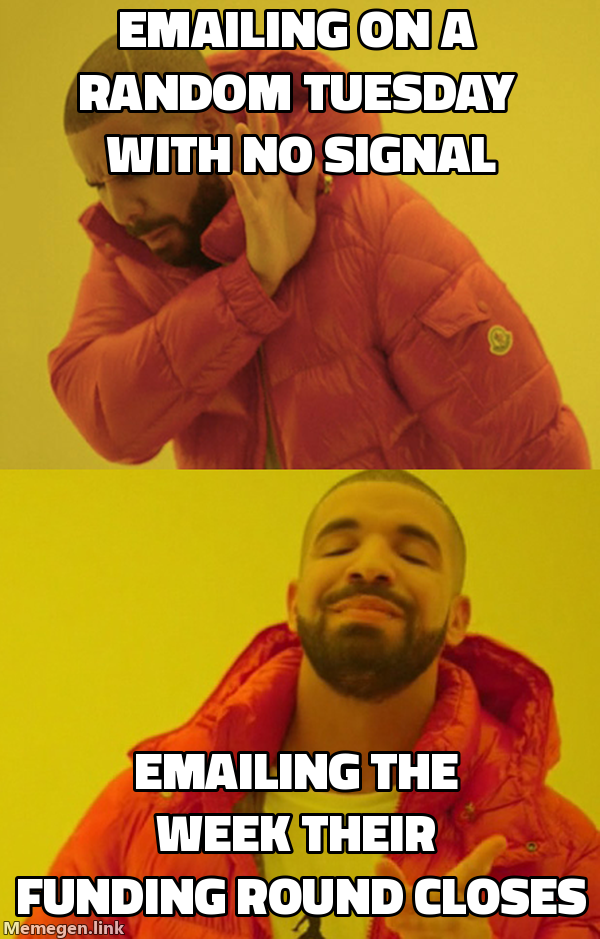 Timing is the edge. The signal tells you when the window is open.
Building the Signal Stack Without Overcomplicating It
The mistake most teams make is trying to listen for every possible signal at once. That produces noise. Start with one signal type per persona.
A workable starting stack looks like this:
- Pull your ICP from Apollo using company-level filters (industry, headcount, geography).
- Run the list through a Clay workflow that checks for recent job posts matching your trigger keywords and recent LinkedIn activity from key personas at each account.
- Score the rows: accounts with two or more active signals in the last thirty days get prioritized; single-signal accounts go into a slower sequence; zero-signal accounts stay in a holding list for monthly re-checks.
- Only the prioritized accounts reach your sequencer.
This approach means your sending volume stays lower and your targeting stays tighter. That is good for deliverability and good for reply quality.
Writing the Trigger-Specific Email
A signal only improves your reply rate if the email acknowledges it without being creepy about it. The frame is relevance, not surveillance.
A funding trigger opener might read: “Saw the Series B close last week. A lot of companies in that moment are standing up a proper outbound function for the first time.” That is a natural bridge from signal to problem to your offer.
A hiring trigger opener: “You have a job post up for an SDR lead. Before you hire someone into a role that takes three months to ramp, some teams are running the same function with an automated system they own. Might be worth a quick look.”
Neither opener names the signal explicitly in a way that feels invasive. Both make the email feel specific rather than templated. The difference in reply behavior between a generic opener and a signal-referenced opener is significant, even when the underlying offer is identical.
For teams building this at scale, the done-with-you outbound model is practical: you keep the motion inside your own stack, and an agency builds and tunes the workflow around your ICP and signal sources.
Signal Freshness and Sequence Timing
Signals decay. A funding announcement is actionable for roughly three to four weeks. After that, the moment has passed and the email reads like you are behind, not current. A job post disappears when the role is filled, which typically happens within sixty to ninety days.
Build freshness into your workflow. If a signal fires but the contact does not receive an email within seven days, archive the trigger and wait for the next one. A stale signal is worse than no signal because it signals to the prospect that your system is not actually real-time.
For teams running managed outbound, signal freshness enforcement is one of the harder operational tasks: it requires re-querying data sources regularly rather than working from a static export. That re-querying cadence is often what separates a working signal-based motion from one that looks good in a slide deck but underperforms in practice.
The Human Gate
Automation handles the sourcing, the enrichment, and the scheduling. A human should still review the first send for any new signal type or any new ICP segment. The reason is practical: signals can misfire. A company that just posted for an SDR might have already hired two and the post is stale. A funding announcement might be for a subsidiary in a geography you do not serve.
At Asphia, a human approves every send before it leaves the system. That approval step catches misfires before they become replied-to complaints, and it keeps the learning loop tight: when a signal misfires consistently, you update the filter before the next batch.
The goal is not to automate the judgment. The goal is to automate the sourcing so the human judgment gets applied to a much smaller, much higher-quality set of decisions.
Signal based outbound is not a more complex version of cold email. It is a more disciplined version. The complexity is front-loaded into the data workflow so the actual outreach stays simple, specific, and easy to approve.
Get the signal tier list in your inbox.
We rank signals from S to D to decide who gets a cold email and who does not. You get the list once. No follow-up emails.
Request received. The list lands in your inbox within 24 hours.
One more step: send the prepared request to [email protected]
FAQ
What is signal based outbound?
Signal based outbound is an outreach approach where you only contact a prospect after detecting a behavioral or contextual trigger, such as a new funding round, a key hire, a job posting, or a tech stack change. The trigger tells you the prospect is in motion, so your email lands at the moment they are most likely to be open to it.
What signals work best for B2B cold email?
The highest-signal triggers for B2B are: new funding announcements (company is spending), VP or Head of Sales hires (building a go-to-market team), new job posts for SDRs or demand gen roles (intent to invest in outbound), technology installs detected via BuiltWith or similar, and leadership changes at target accounts.
How do you find buying signals at scale?
Clay, Apollo, and LinkedIn Sales Navigator are the primary sources. Clay lets you pull signals from multiple APIs (Crunchbase for funding, LinkedIn for hires, BuiltWith for tech) into a single enrichment workflow and then score or filter rows before they reach your sequencer. Apollo covers job posts and growth signals natively.
How is signal based outbound different from intent data platforms?
Intent data platforms (Bombora, G2, 6sense) track anonymous content consumption and report topic spikes at the company level. Signal based outbound typically uses first-party or semi-public signals: job posts, LinkedIn activity, funding data, tech installs. Intent platforms add a layer on top but are not required to run a signal-based motion.
Does signal based outbound work for smaller B2B companies without a big data budget?
Yes. Free or low-cost signals (LinkedIn job posts, Crunchbase free tier, Google Alerts for funding news) are enough to build a trigger list for a focused ICP. You do not need enterprise intent data to start. The workflow matters more than the data source.
Is signal based cold email GDPR compliant?
Legitimate interest under GDPR allows B2B cold email when the message is relevant to the recipient's professional role and you process only business contact data. A signal-based approach actually strengthens the legitimate interest case because relevance is easy to document. Always include a clear opt-out and do not use personal email addresses.

Ahmet Faruk Yilmaz
Founder of Asphia. He builds and runs signal-based B2B outbound engines for lean teams, and has booked meetings with teams at companies across five markets. Writes about cold email, Clay, deliverability, and GTM engineering.
Want this run for you?
Get a free GTM analysis. We show you the exact engine we would build.
Get your free GTM analysis →