Cold Email for HR Tech Companies: Sequences That Actually Book Demos
February 5, 2026 · 6 min read · by Ahmet Faruk Yilmaz, Founder of Asphia
TL;DR
HR tech cold email works when you lead with a specific pain signal (a hiring spike, a recent funding round, a new CHRO) and tie your demo ask to that signal directly. Generic sequences about 'streamlining HR processes' get deleted. Signal-first sequences with a one-line ask get replies.
Cold email for HR tech companies works when each message has a specific reason to exist. A generic pitch about saving time on HR tasks does not. If your sequence opens with “we help companies improve their HR processes,” it is already lost.
Lead with a signal, connect your product to it, and make the ask easier to answer than ignore.
Why HR Tech Is a Hard Vertical for Cold Outreach
HR buyers are constant targets. Every payroll vendor, ATS, and benefits platform emails the same CPO list. Their inboxes are noisy, and they spot generic outreach quickly.
The second challenge is persona fragmentation. HR tech has at least four distinct buyers: the CHRO or CPO (strategy, workforce planning, board-level reporting), the VP of Talent (sourcing, candidate experience, time-to-fill), the Head of People Ops (compliance, systems, onboarding), and the Benefits Manager (enrollment, broker relationships, employee experience). One product rarely solves the same problem for all four. Many companies still send them the same email.
The third challenge is longer sales cycles and committee buying. A single cold email is rarely going to produce a same-week signed contract. The realistic goal is a qualified discovery call. Sequences should be optimized for that one outcome only.
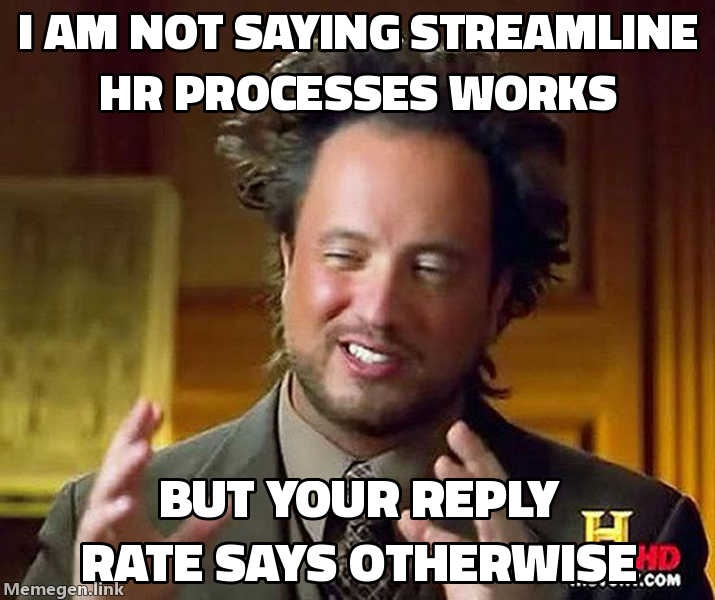 Every HR buyer has seen this opener a thousand times. Lead with a signal, not a category.
Building the Signal Layer Before You Write a Word
The highest-performing HR tech sequences start with a trigger, not a contact list. Useful signals include:
Hiring expansion. A company that posted thirty-plus engineering roles in the last sixty days is probably feeling ATS friction, candidate pipeline stress, or onboarding backlogs. If your product addresses any of those, the timing is real.
Leadership change. A new CHRO or VP of People typically audits the existing tech stack in the first ninety days. A relevant email during that window has a high chance of being read. Tools like Clay enrichment can surface these job changes at scale before they become public knowledge.
Funding announcements. A Series B company that just raised is about to hire fast. They will need tools they did not need at Series A. This is a clean, time-bound signal with a clear implication for your pitch.
Compliance pressure. New regulations around pay transparency, benefits reporting, or data privacy create urgent, concrete problems. If your product helps with any of these, referencing the specific regulation in context is a legitimate and relevant opening.
The Sequence Structure That Books Demos
A practical three-step structure for HR tech outreach:
Email 1 (Day 1): Signal plus one problem. Reference the specific trigger. Name the problem it creates. Ask one narrow question or make one narrow observation that invites a reply. Keep this under eighty words. No bullets, no feature list, no case studies in the first email.
LinkedIn touchpoint (Day 4): Connection or comment. Send a connection request with a short personalized note, or comment on something the prospect posted. The goal is contact, not a pitch.
Email 2 (Day 8): Different angle, same ask. Approach the same problem from a different direction. Maybe the first email addressed cost, this one addresses risk or speed. End with a direct low-friction ask: “Worth a fifteen-minute call this week?”
Email 3 (Day 15): Short breakup. One to two sentences. Acknowledge you have been in touch, offer a reason the timing might be wrong, and leave the door open. This email often gets more replies than the first two.
For high-ticket HR platforms selling to CHROs, adding a direct mail element or a phone touchpoint between emails two and three can improve conversion for enterprise-sized targets.
Copy Frameworks That Work for HR Tech
Two frameworks that hold up in practice:
Problem-Signal-Ask. Open by naming something true about their situation (the signal). Name the problem that signal usually creates. Ask if that problem is something they are actively working on. This is not a pitch. It is a relevance check that earns the right to pitch.
The One-Number Frame. If your product reduces time-to-hire, improves offer acceptance rates, or cuts onboarding time, frame the email around that one outcome. Do not invent a number. “Teams like yours typically cut three weeks off onboarding” is valid if you have seen it. Do not claim a “67 percent reduction in time-to-hire” unless it came from a real cohort with a documented methodology.
Avoid vague promises to “improve HR processes.” Skip openings that begin with “I” or a compliment. HR buyers ignore those first.
Matching Sequence Design to Product Type
The sequence design should reflect what you are selling.
For ATS and sourcing tools, Talent Acquisition leaders are the right first contact. The relevant signal is open requisition volume or time-to-fill data. The ask is a demo focused on one specific workflow, not a full platform walkthrough.
For HR analytics and workforce planning tools, the CHRO is the buyer, and the signal is usually a board-level outcome: retention risk, headcount efficiency, or upcoming reporting requirements. These emails need to speak to outcomes, not features.
For compliance and payroll tools, the Head of People Ops or CFO is often the real decision-maker. Regulatory deadlines and audit risk are the relevant signals.
For benefits platforms, the open enrollment calendar is the most reliable signal. An email arriving eight weeks before open enrollment has context. The same email arriving in February has none.
Deliverability Is Not Optional
HR tech outreach at any meaningful volume needs clean infrastructure. A shared sending pool will eventually damage your domain reputation, and a damaged domain means emails going to spam regardless of how good the copy is.
Use dedicated sending domains, warm them up properly before launching, and keep daily send volumes within the capacity of your inbox warm-up period. Monitor spam placement rates weekly. If you are working with an agency or managed outbound service, confirm they own your deliverability setup rather than pooling your sends with other clients.
For companies operating across the EU, GDPR compliance is a functional requirement, not a legal footnote. Suppression lists, opt-out handling, and legitimate interest documentation need to be in place before the first email goes out. More on this at gdpr.eu.
The Role of Human Approval at Scale
Keep a human in the loop before sends go out, even when research and drafting are automated. Automated systems surface signals and draft copy quickly. Human review catches stale signals, awkward personalization, or a hiring-growth angle aimed at a prospect that just announced layoffs.
If building this internally is too much work, done-for-you cold email providers can run the process while you handle the demos. If you want to own the system, a done-with-you outbound build gives you the stack and playbook without ongoing agency dependency.
Either way, the sequence should be written for that specific buyer.
Get the signal tier list in your inbox.
We rank signals from S to D to decide who gets a cold email and who does not. You get the list once. No follow-up emails.
Request received. The list lands in your inbox within 24 hours.
One more step: send the prepared request to [email protected]
FAQ
Does cold email work for HR tech companies?
Yes, but only with precise targeting. HR buyers receive high volumes of outreach, so generic copy fails. Sequences built around hiring surges, leadership changes, or compliance deadlines outperform blanket lists by a wide margin. The message must address something the buyer is experiencing now.
Who should HR tech companies target with cold email?
The best targets are Chief People Officers, VPs of HR, and Heads of Talent Acquisition at companies showing growth signals: recent funding, headcount expansion, new office openings, or a CHRO hire. Director-level buyers work well for specific tools (ATS, payroll, benefits). Match the persona to the problem your product solves.
How long should an HR tech cold email sequence be?
Three to five touchpoints over two to three weeks is a practical range. A two-step sequence (initial email plus one follow-up) often captures 80 percent of replies. Adding a LinkedIn touchpoint between emails increases reply rates for senior buyers who are more active on LinkedIn than in their inbox.
What subject lines work for HR tech cold email?
Short, specific subject lines referencing something real work best. Examples: the buyer's company name plus a recent hire milestone, or a question tied to a pain point like retention or compliance. Avoid generic phrases like 'improve your HR processes' and never use all caps or excessive punctuation.
Is cold email to HR buyers GDPR compliant?
B2B cold email to work email addresses is generally permissible under GDPR's legitimate interest basis when you have a genuine business reason and offer a clear opt-out. Always research applicable local rules, particularly in Germany and the Netherlands, and use a suppression list to honor unsubscribes immediately. See gdpr.eu for guidance.
What is the biggest mistake HR tech companies make with cold email?
Sending the same message to every HR persona. A CHRO cares about retention and workforce strategy. A Talent Acquisition Manager cares about time-to-fill and sourcing efficiency. Using one generic sequence for both burns the list and hurts deliverability. Persona-specific copy is not optional at any meaningful scale.

Ahmet Faruk Yilmaz
Founder of Asphia. He builds and runs signal-based B2B outbound engines for lean teams, and has booked meetings with teams at companies across five markets. Writes about cold email, Clay, deliverability, and GTM engineering.
Want this run for you?
Get a free GTM analysis. We show you the exact engine we would build.
Get your free GTM analysis →