CRM Lead Routing Automation: How to Assign Inbound Leads in Under 60 Seconds
November 14, 2025 · 5 min read · by Ahmet Faruk Yilmaz, Founder of Asphia
TL;DR
CRM lead routing automation uses rules or AI to assign inbound leads to the right rep the moment they enter your system, typically in under 60 seconds. The key levers are territory rules, firmographic filters, and round-robin logic wired directly to your CRM so no lead sits unassigned.
The average inbound lead waits hours before anyone claims it. Not because sales teams are lazy, but because the handoff is manual: a notification fires, someone checks the queue, someone else decides who should own it, and by then the prospect has already moved on.
CRM lead routing automation solves this by making the assignment decision before a human even sees the lead. The moment a form is submitted, a chat conversation ends, or a deal stage is updated, the system evaluates the lead against your rules and puts it in exactly the right rep’s queue, usually in under 60 seconds.
What Lead Routing Automation Actually Does
At its core, routing automation is a conditional logic engine sitting between your lead intake and your CRM records. When a new lead arrives, the system checks a set of criteria (territory, company size, industry, lead source) and writes an owner field without waiting for human input.
The simplest version is round-robin: leads cycle through a list of available reps in order. A slightly more sophisticated version adds territory logic, so a company in Germany goes to your DACH rep regardless of whose turn it is. The most advanced setups score the lead first, then route based on fit tier, sending high-intent enterprise leads to senior AEs and lower-tier leads to BDRs or a nurture sequence.
What all of these have in common is that the routing happens at the moment of entry, not at the moment someone gets around to checking the queue.
The Three Layers of a Working Routing System
Layer 1: Firmographic rules. Company size, industry, and geography are the most stable routing signals. They do not change between the time the lead fills out a form and the time your rep calls. Build these rules first. A professional services firm in the Netherlands and a SaaS startup in Germany should reach different reps, and that logic should be encoded in your CRM, not in someone’s head.
Layer 2: Source and intent signals. Not every inbound lead carries the same weight. A contact who clicked on a pricing page and downloaded a case study is not the same as someone who entered their email for a newsletter. Routing rules that factor in source and on-site behaviour allow you to route high-intent leads to your fastest responders. If you are running outbound alongside inbound, this is where signal-based routing connects to your outbound engine builder logic.
Layer 3: Availability and capacity caps. Even perfect routing rules fail if they dump ten leads on a rep who just went on holiday. Availability-aware routing checks rep calendars or status flags and either holds the lead in a queue or redistributes it. Most CRMs require a third-party tool (Chili Piper, LeanData, or a custom workflow) to handle this well.
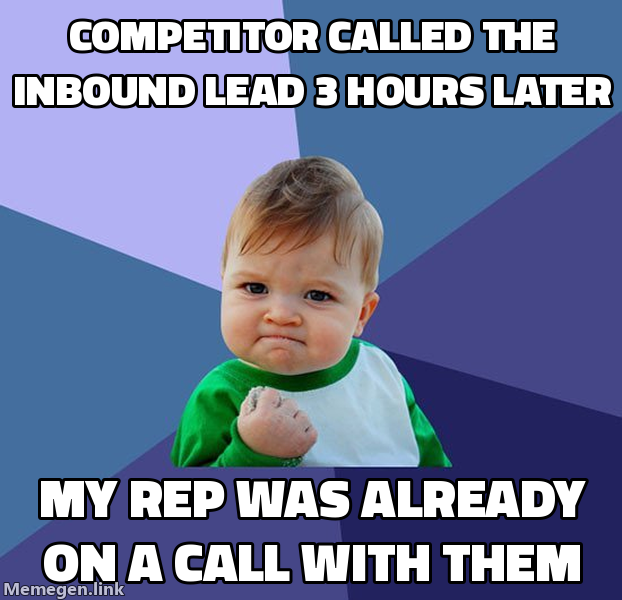 The rep who picks up first wins the deal. Automated routing is the only way to win that race consistently.
Setting Up Routing in HubSpot or Salesforce
In HubSpot, lead routing lives inside Workflows. You create a contact-based or deal-based workflow, add your filtering criteria (use property-based branches for territory and company size), and end each branch with an “Assign to owner” action. Round-robin is handled natively via a rotating assignment step introduced in recent releases.
In Salesforce, Lead Assignment Rules are configured under Setup. Each rule entry has criteria and an assigned user or queue. The order of entries matters: Salesforce evaluates them top to bottom and stops at the first match, so put your most specific rules at the top.
For either platform, the most common error is building one long flat rule set instead of layered conditional logic. Keep territory rules separate from size rules and use nested branches rather than trying to encode everything into a single criteria list.
Connecting Routing to Your Outbound Motion
Lead routing is usually framed as an inbound problem, but the same infrastructure matters for outbound replies. When a prospect responds to a cold email sequence, that reply should route back to the rep who sent it, or to the owner of that account in your CRM, rather than landing in a shared inbox.
If you are running done-for-you cold email or a managed outbound service, this means your CRM needs to know which rep owns which accounts before sequences go out. The routing logic runs in reverse: you assign account ownership first, then sequences are sent from that rep’s mailbox, so replies naturally come back to the right person.
This is one reason RevOps teams that mature beyond basic outbound start treating CRM hygiene and routing as foundational, not optional. Without clean ownership data, reply routing breaks down.
The Maintenance Problem Most Teams Ignore
Routing rules built once and never revisited are a liability. As your team grows, territories get redrawn. As your ICP evolves, the firmographic filters that made sense at ten reps may not make sense at thirty. Reps leave and get replaced, and if their accounts are not reassigned in the routing rules, new leads from those territories will go to a departed employee.
Put a quarterly routing audit on your RevOps calendar. Pull a report of leads assigned in the last 90 days, check the distribution across reps, and look for any misroutes where a lead went to the wrong territory or sat unassigned for more than a few hours. The audit takes less than an hour and prevents the kind of silent failures that only surface when a prospect complains they never heard back.
For teams building this out for the first time or restructuring an existing setup, the b2b lead generation agency europe and clay enrichment service pages cover how enriched data from tools like Clay plugs into these routing workflows to give you cleaner firmographic signals at the point of entry.
Lead routing automation is not a complex project. It is a configuration task with a high leverage outcome: faster response times, fewer misrouted leads, and a sales team that spends time selling instead of arguing over who owns which account.
Get the signal tier list in your inbox.
We rank signals from S to D to decide who gets a cold email and who does not. You get the list once. No follow-up emails.
Request received. The list lands in your inbox within 24 hours.
One more step: send the prepared request to [email protected]
FAQ
What is CRM lead routing automation?
CRM lead routing automation is a system that evaluates each inbound lead against predefined rules (territory, company size, industry, source) and assigns it to the correct sales rep or queue automatically, without a human manually reviewing the intake queue.
How fast should an inbound lead be followed up after routing?
Speed matters more than most teams realise. Research from multiple B2B studies consistently shows that response time within the first five minutes dramatically increases connect rates compared to waiting even 30 minutes. Automated routing removes the handoff delay that causes most of the lag.
Which CRMs support lead routing automation natively?
HubSpot, Salesforce, and Pipedrive all offer built-in assignment rules. HubSpot has workflow-based round-robin and territory routing; Salesforce has Lead Assignment Rules in its native config. Most mid-market teams also layer in tools like LeanData or Chili Piper for more advanced logic.
What data points should drive lead routing rules?
The most reliable routing signals are company size (employees or revenue), industry vertical, geographic territory, and the lead source or campaign that brought them in. Behavioural signals like page visits or intent scores can add a second layer for prioritisation.
Can lead routing automation work alongside outbound sequences?
Yes. Many RevOps teams use the same CRM routing logic for both inbound leads and outbound replies, so a prospect who responds to a cold email gets routed to the same rep who sent it rather than landing in a generic queue.
What is the biggest mistake teams make with lead routing?
Building routing rules once and never updating them. As your team grows, territories shift, and new verticals open up, stale rules create misroutes. Schedule a quarterly audit of your assignment logic the same way you audit your ICP.

Ahmet Faruk Yilmaz
Founder of Asphia. He builds and runs signal-based B2B outbound engines for lean teams, and has booked meetings with teams at companies across five markets. Writes about cold email, Clay, deliverability, and GTM engineering.
Want this run for you?
Get a free GTM analysis. We show you the exact engine we would build.
Get your free GTM analysis →