AI SDR Cost Per Meeting Booked: Real Numbers vs Hiring a Human SDR
October 11, 2025 · 4 min read · by Ahmet Faruk Yilmaz, Founder of Asphia
TL;DR
Compare AI-assisted outbound and human SDR costs with a local, assumption-led model. Include staffing, data, tooling, infrastructure, review, qualification, and opportunity costs; the lower cost per meeting depends on your observed funnel and capacity, not scale alone.
The question is simple: what does one booked meeting cost with an AI SDR, and how does that compare with hiring a human SDR?
AI-assisted outbound may change the cost structure, but it does not automatically lower cost per qualified meeting. Compare a documented set of assumptions with observed funnel data, including the work required to review, qualify, and follow up.
What Goes Into the Cost of a Human SDR
Before comparing, you need the real number for a human SDR, not just base salary.
A full-time SDR model should include local compensation, employer taxes, benefits, management time, tooling, recruiting, and ramp time. The amount and ramp period vary by market, role design, and company context, so establish them from your own budget and historical data.
Also account for attrition where it is relevant to your team. A replacement can create recruiting and ramp costs, but the effect should be modeled from your own history rather than assumed from an industry generalization.
Use qualified meetings, show rates, and opportunity quality—not a generic meeting count—to calculate the cost of the human model.
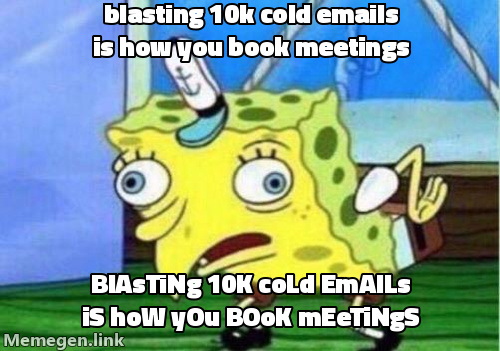 Volume is not the lever. Targeting is.
What Goes Into the Cost of an AI SDR System
An AI outbound system has a different cost structure. Instead of a salary, you pay for:
- Data and enrichment (Apollo, Clay, or similar)
- Signal sourcing (job postings, LinkedIn triggers, intent data)
- Email infrastructure (domains, mailboxes, warmup)
- Sending tools and permitted channel workflows
- Time to build and maintain the system (or an agency fee if outsourced)
Some costs may be fixed while others grow with data usage, mailboxes, reviews, reply handling, and qualification. Model marginal cost and operational capacity from actual contracts and usage; sending more does not necessarily improve qualified outcomes.
For done-with-you outbound, ownership, handoff, and ongoing work are agreed during scoping. For done-for-you outbound, management and setup responsibilities are also scoped; timing depends on access, data, infrastructure, approvals, and the selected workflow.
The Real Levers That Move Cost Per Meeting
Volume alone does not book meetings. Four factors determine the cost per meeting:
Signal quality. A real, documented trigger can help form a relevance hypothesis. Verify the source and test it against a control; Clay enrichment can organize signals for review but does not establish intent or a meeting outcome.
Targeting accuracy. Sending 10,000 emails to the wrong ICP costs more per meeting than sending 500 to the right ones. List quality through tools like Apollo lead lists matters more than raw send volume.
Human approval gate. Define which messages or samples require review, who owns the decision, and what evidence supports material claims. Review can reduce avoidable errors, but it does not guarantee accuracy or outcomes. B2B appointment setting shows where this step can fit in the full system.
Deliverability. An email that lands in spam costs the same to send and books zero meetings. Domain warm-up, inbox rotation, and sender reputation management are operational costs that determine whether your economics work at all.
When Human SDRs Still Win
A human SDR still wins in three situations:
- Very small deal counts targeting a handful of named accounts where deep relationship-building is required before any outreach
- Markets where buying happens through warm referral chains and cold outreach is genuinely inappropriate
- Early-stage companies with fewer than a few hundred realistic prospects in the addressable market
For some teams, AI assistance may make sense after a controlled pilot; for others, a human-led or hybrid model may fit the buyer journey and capacity better. Compare qualified outcomes, cost, risk, and ownership with your own assumptions.
How to Think About the Build vs Buy Decision
Running the system yourself takes time. Starting from scratch, setting up domains, warming inboxes, building Clay flows, connecting signal sources, and writing sequences that convert can take weeks or months.
If you want help comparing operating models, Asphia’s outbound service can scope infrastructure, review, ownership, and first-sequence work. Timing and outcomes are agreed only after the relevant access, data, and approvals are assessed.
Either way, use the same definitions for cost, qualified meeting, show rate, and capacity across both models. The answer can change as data quality, ownership, recipient context, and operating costs change.
Request the signal tier list.
A practical view of how we rank observable signals before outreach. We review each request for fit and may reply by email; delivery is not automatic.
By submitting, you agree to processing described in our Privacy Policy.
Your request was submitted. If it is a fit, we may follow up by email.
One more step: send the prepared request to [email protected]
FAQ
What is a typical AI SDR cost per meeting booked?
It depends on tooling, data, infrastructure, review, qualification, and whether you build in-house or use a managed service. Calculate it from your own fully loaded costs and observed qualified-meeting rate; no general benchmark can predict your result.
How much does it cost to hire a human SDR?
Build a local fully loaded model: compensation, taxes and benefits, management, tooling, recruitment, ramp time, and attrition can all matter. Costs vary materially by market, contract, role design, and period, so do not use a generic online band as a budget or return forecast.
Can an AI SDR fully replace a human SDR?
Not entirely. AI handles research, personalization, sequencing, and inbox management at scale. A human still needs to approve sends, handle nuanced replies, and run discovery calls. The best setups combine AI throughput with human judgment at key decision points.
What tools do AI SDR systems use?
A stack may include data and enrichment tools, documented signal sources, sending infrastructure, a CRM, and review controls. Any LinkedIn activity must use permitted native features or an explicitly authorized integration; tools alone do not determine message quality or compliance.
Is AI outbound GDPR compliant?
Whether a workflow is lawful depends on the data, purpose, jurisdiction, lawful basis, and safeguards. Document the applicable basis, honor applicable opt-outs, avoid inappropriate data use, and obtain legal advice for the specific program.
What volume of outreach does an AI SDR system handle compared to a human?
Capacity depends on the permitted channels, account and provider limits, review depth, deliverability, qualification, and team ownership. Track the throughput and qualified outcomes of your own workflow rather than using generic send-volume comparisons.

Ahmet Faruk Yilmaz
Founder of Asphia. He builds and runs signal-based B2B outbound engines for lean teams, and writes about cold email, Clay, deliverability, and GTM engineering.
Want this run for you?
Get a free GTM analysis. We show you the exact engine we would build.
Request the planning framework →