Top Smartlead Alternatives That Agencies Actually Use in 2026
January 28, 2026 · 4 min read · by Ahmet Faruk Yilmaz, Founder of Asphia
TL;DR
The strongest Smartlead alternatives for agencies in 2026 are Instantly (for raw volume and deliverability infrastructure), Lemlist (for multichannel sequences with LinkedIn steps), and Salesforge (for AI-generated personalization at the sequence level). The right choice depends on whether your bottleneck is sending scale, channel mix, or copy quality.
The honest answer: Smartlead is a solid tool, and most agencies switching away are not doing so because it is broken. They are switching because their bottleneck changed, whether that is deliverability at higher volumes, multichannel needs, or tighter enrichment integration.
Here are the tools agencies are actually deploying in 2026, and what each one is actually good at.
Why Agencies Look for Smartlead Alternatives
Smartlead built its reputation on inbox rotation and scalable campaign management. For agencies running clean, high-volume email outreach, it still works well. The searches for alternatives usually come from one of three places.
First, deliverability pressure. As inbox providers tighten spam filtering, agencies need more granular warmup control, faster bounce handling, and better per-domain health monitoring. Some find Smartlead’s tooling sufficient, others hit limits.
Second, multichannel demand. Clients increasingly want LinkedIn touchpoints alongside email. Smartlead is email-only. That gap sends agencies toward tools that handle both in one sequence builder.
Third, AI personalization. The gap between a generic sequence and a signal-based, per-lead message is where meetings get booked or don’t. Some agencies want that intelligence layer baked into the sending tool itself rather than assembled from Clay plus a separate sender.
The Main Alternatives Agencies Deploy
Instantly is the most direct Smartlead competitor and the most common migration target. Its inbox rotation infrastructure is widely regarded as the best in class for pure email volume. The warmup network is large, deliverability monitoring is granular, and the campaign builder handles complex sequences without much friction. Agencies managing fifty-plus domains in parallel tend to prefer it. See the full Instantly vs Smartlead breakdown for a detailed comparison.
Lemlist is the pick when multichannel matters. It handles email, LinkedIn visits, LinkedIn connection requests, and manual tasks in a single sequence, which removes the need to coordinate two tools. Its image and video personalization features are genuinely differentiated. The tradeoff is that its warmup and deliverability infrastructure is less mature at high volume than either Smartlead or Instantly. Agencies using a Lemlist agency model tend to deploy it for mid-volume campaigns where channel mix outweighs raw scale.
Salesforge positions on AI-generated personalization baked directly into the sending platform. Rather than building the personalization layer externally in Clay and passing it in as a variable, Salesforge attempts to do it inside the tool. The quality depends heavily on your signal inputs, but for agencies that want fewer moving parts, it reduces stack complexity.
Mailreach and Warmbox are not full Smartlead replacements but are worth naming: agencies that stay on Smartlead sometimes bolt these on for superior warmup and inbox placement testing. They solve a specific deliverability sub-problem rather than replacing the sending layer.
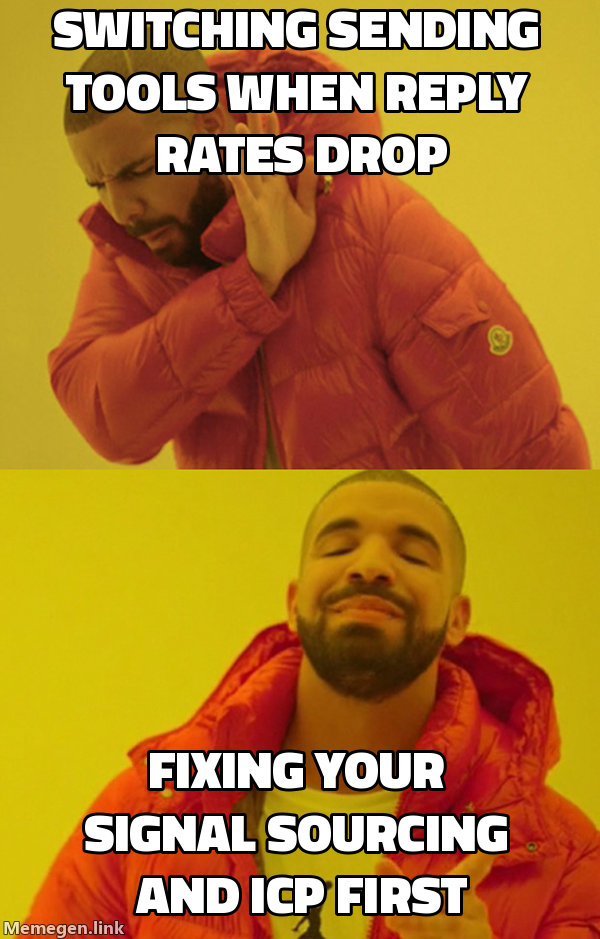 The tool is not the bottleneck. The targeting usually is.
How to Choose Based on Your Actual Bottleneck
The mistake agencies make is shopping for features before diagnosing the real constraint.
If your campaigns are underperforming because of inbox placement issues, and your sending domain reputation is declining, deliverability infrastructure is your bottleneck. Instantly or Mailreach-plus-Smartlead solves that. Switching to Lemlist will not.
If your campaigns get opened but not replied to, the problem is copy quality or targeting, not the sending tool. No alternative fixes a signal problem or a weak ICP. The right move is upstream: better enrichment via Clay enrichment service, tighter signal sourcing from Apollo or LinkedIn activity, and copy that references a specific reason to reach out today.
If your clients want LinkedIn touchpoints and you are running everything through email-only tools, Lemlist or a dedicated LinkedIn automation via HeyReach makes sense. HeyReach is purpose-built for LinkedIn at agency scale, and pairing it with a clean email sender covers both channels without compromise.
If you want to skip the tool assembly entirely and have the outbound engine built and run for you, that is a different decision than picking a sending platform. Done for you outbound covers the whole stack.
Where Asphia Fits
Asphia builds and runs signal-based outbound for B2B companies across Europe and beyond. The stack uses Clay and Apollo for enrichment, and the sending layer is chosen based on the client’s volume, channel needs, and compliance requirements. For GDPR markets, particularly across NL, DE, and the UK, that means verifying legitimate interest and suppressing contacts correctly regardless of which sending tool is in use. See how GDPR-compliant cold email works in practice.
Every message that goes out through an Asphia-run system is approved by a human before it sends. The tool is a delivery mechanism. The intelligence lives in the signal selection, the enrichment, and the copy logic.
If you are evaluating tools because your outbound is not booking meetings, the tool is rarely the root cause. The diagnosis usually sits in the targeting or the copy. A done-with-you outbound build walks through the full stack audit before touching any sending platform.
For agencies building their own stack, Google’s Email Sender Guidelines and Microsoft’s Sender Support documentation are the authoritative references for what actually determines inbox placement at scale. No tool overrides the fundamentals they describe.
Get the signal tier list in your inbox.
We rank signals from S to D to decide who gets a cold email and who does not. You get the list once. No follow-up emails.
Request received. The list lands in your inbox within 24 hours.
One more step: send the prepared request to [email protected]
FAQ
What is the best Smartlead alternative for cold email agencies?
Instantly is the most common replacement when the bottleneck is sending volume and inbox rotation. Lemlist wins when agencies need LinkedIn steps in the same sequence. Salesforge is the pick when per-lead personalization at scale matters more than raw throughput.
Is Instantly better than Smartlead?
Instantly has a stronger reputation for bulk inbox management and warmup infrastructure. Smartlead tends to win on the campaign-builder UX and its lead flow integrations. Most agencies that switch cite inbox management as the deciding factor, not features.
What sending tool do agencies use with Clay?
Most Clay-based outbound stacks route into Smartlead or Instantly for email delivery. Both accept CSV or webhook pushes from Clay. Lemlist also has a direct Clay integration. The sending tool is largely interchangeable once enrichment and copy are handled upstream.
Does Lemlist replace Smartlead completely?
Not for high-volume pure-email campaigns. Lemlist handles multichannel sequences well, including LinkedIn steps and personalised image variables, but its inbox rotation and warmup tooling is less mature than Smartlead or Instantly at volume. Agencies often run both for different campaigns.
What should I look for in a Smartlead alternative?
Inbox rotation and warmup quality, deliverability monitoring, webhook or CSV import from your enrichment stack, sequence flexibility, and support response time. Pricing per mailbox matters at agency scale where you may manage dozens of sending domains.
Can I switch from Smartlead without rebuilding my whole stack?
Usually yes. Most alternatives accept the same prospect CSV format and connect to the same enrichment tools like Clay or Apollo. The main migration work is recreating sequence templates and reconnecting mailboxes. A weekend migration is realistic for most agency stacks.

Ahmet Faruk Yilmaz
Founder of Asphia. He builds and runs signal-based B2B outbound engines for lean teams, and has booked meetings with teams at companies across five markets. Writes about cold email, Clay, deliverability, and GTM engineering.
Want this run for you?
Get a free GTM analysis. We show you the exact engine we would build.
Get your free GTM analysis →