How Google's 2026 Spam Filters Work and How Cold Email Survives Them
August 21, 2025 · 5 min read · by Ahmet Faruk Yilmaz, Founder of Asphia
TL;DR
Google's spam filters in 2026 evaluate sender reputation, domain authentication (SPF, DKIM, DMARC), engagement history, and content signals simultaneously. Cold email survives by sending from warmed dedicated domains, keeping lists clean, personalising at the message level, and never crossing Google's bulk-sender thresholds without proper setup.
Google’s spam filters are not a single rule. They are a layered scoring system that evaluates every inbound message in milliseconds. For B2B cold email, the result is binary: inbox or spam. Here is how the system actually works in 2026 and what senders must do to land on the right side of it.
The Four Layers Google Evaluates
Sender reputation. Gmail assigns a reputation score to your sending IP and domain based on historical behaviour: complaint rates, bounce rates, spam trap hits, and engagement patterns from recipients. A brand-new domain with no history starts at neutral and builds reputation through warm-up. A domain that has been flagged for spam carries negative history that persists even after an IP change.
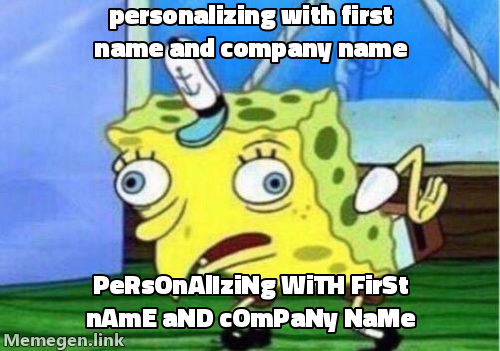 Swapping in a name on 10,000 identical emails is not personalisation. Gmail knows it too.
Authentication. SPF, DKIM, and DMARC are no longer optional. Google formalised this in its 2024 bulk sender requirements, and in 2026 these checks are enforced with no grace period. SPF tells Gmail which servers are authorised to send from your domain. DKIM provides a cryptographic signature Gmail uses to verify the message was not tampered with in transit. DMARC ties both together and tells Gmail what to do when a message fails (quarantine or reject). Without all three aligned, your messages are flagged before a human ever reads them.
Content signals. Gmail’s classifiers read the message body, subject line, and headers. High-volume identical copy, trigger phrases associated with phishing or unsolicited commercial email, excessive images relative to text, and mismatched anchor text all push the spam score up. Personalised plain-text messages that look like something a human actually wrote score lower on the spam side, because they do.
Engagement history. This is the layer most cold email guides underweight. Over time, Gmail learns how recipients in your target segment respond to your messages. Replies and moves-to-inbox pull reputation up. Spam reports and no-engagement (delivered but never opened over weeks) pull it down. The filter is adaptive, not static.
What Google Changed in 2024 and 2025
Google’s February 2024 bulk sender policy update introduced two hard requirements for anyone sending more than 5,000 messages per day to Gmail addresses: one-click list-unsubscribe headers and a spam complaint rate below 0.10 percent (with enforcement action beginning above 0.30 percent). These requirements apply to all senders regardless of intent.
For B2B outbound specifically, the practical effect is that senders running high-volume blasts to Gmail-hosted domains face stricter enforcement than in previous years. The workaround is not to find a loophole. The workaround is to send less, to better-targeted people, with messages that actually earn replies.
How Cold Email Survives in 2026
Dedicated sending domains with proper warm-up. Your primary domain should not be used for cold outreach. A dedicated subdomain or separate sending domain protects your brand reputation and gives you a clean slate to build sending history on. Warm it up gradually over four to eight weeks with a mix of automated warm-up tool traffic and, ideally, real conversations.
Full authentication stack. Before sending a single cold message, verify that SPF, DKIM, and DMARC are in place and aligned. Use Google Postmaster Tools (free) to monitor your domain’s reputation and spam rate in near real time. If your spam complaint rate climbs above 0.08 percent, pull back volume immediately.
Personalisation at the message level, not just the first name. The signal that separates inbox-landing cold email from spam is specificity. A message that references something real about the recipient’s company, recent hire, or publicly stated priority looks different to both Gmail’s classifiers and the human reading it. This is the core of what we build at Asphia: signal-based cold email that ties each message to a verifiable trigger rather than a demographic segment.
List hygiene before every send. Every invalid address you hit increases your bounce rate and damages sender reputation. Verify your list against an email validation service before upload. Remove catch-all domains you cannot confirm, and suppress anyone who has previously bounced or complained.
Volume limits per inbox. Even a fully warmed domain should not send more than 30 to 50 messages per inbox per day. Distribute your total send volume across multiple inboxes and domains. This caps your exposure if one domain takes a reputation hit and prevents triggering Gmail’s velocity-based filters.
The Human Approval Layer
One reason done-for-you cold email run by an experienced agency outperforms in-house blasts is not just technical setup. It is that a human reviews copy and targeting before it goes out. Gmail’s filters are trained on the behaviour of real recipients. If the people on your list are not the right people, or the message would not earn a reply from anyone on a good day, no amount of authentication work saves you. The deliverability problem and the relevance problem are the same problem.
If you are building outbound in-house, the done-with-you model covers both: technical infrastructure set up correctly from the start, and a targeting and copy framework that produces messages worth reading.
For background on Google’s official sender requirements, the Google Email Sender Guidelines published at support.google.com remain the primary reference for compliance thresholds and authentication requirements.
What to Do This Week
Check your current authentication setup with a free tool like MXToolbox. Pull up Google Postmaster Tools and add your sending domain if you have not already. Review your last campaign’s bounce rate and complaint rate. If either is above 0.10 percent, pause and fix the list before the next send.
Deliverability is not a one-time configuration. It is an ongoing signal that your sending behaviour earns over time. The senders who land in the inbox in 2026 are the ones who treat every send as a reputation transaction, not just a message delivery event.
Get the signal tier list in your inbox.
We rank signals from S to D to decide who gets a cold email and who does not. You get the list once. No follow-up emails.
Request received. The list lands in your inbox within 24 hours.
One more step: send the prepared request to [email protected]
FAQ
Does cold email always go to spam on Gmail?
Not automatically. Gmail scores each message against sender reputation, authentication records, and content signals. Cold email lands in the inbox when the sending domain is warmed, fully authenticated, and the message is personalised and relevant rather than templated blast copy.
What authentication records do I need to avoid Gmail spam filters?
You need a valid SPF record that lists your sending server, a DKIM signature aligned to your domain, and a DMARC policy set to at least p=none with a reporting address. Without all three, Gmail treats your messages as unauthenticated and routes them to spam or rejects them outright.
How many cold emails can I send per day to Gmail addresses without triggering filters?
Google's bulk sender rules require a one-click unsubscribe header and a spam complaint rate below 0.10 percent for senders exceeding 5,000 messages per day to personal Gmail accounts. For B2B outbound targeting workspace accounts, volume thresholds are lower in practice. Most deliverability practitioners recommend staying under 50 sends per inbox per day during the warm-up phase.
Does personalization actually affect spam filter scoring?
Engagement signals (opens, replies, clicks) train Gmail's filters over time. Personalised messages that generate genuine replies build positive sender reputation. Identical copy sent at scale to cold lists produces low engagement and negative signals, which trains Gmail to route future messages from that domain to spam.
How long does it take to warm up a domain for cold email?
A standard warm-up takes four to eight weeks, starting with a handful of sends per day and increasing gradually. Automated warm-up tools help by generating synthetic engagement, but real replies from real people carry more weight with Gmail's reputation systems.
What content signals does Gmail use to flag cold email as spam?
Gmail's content filters flag excessive punctuation and capitalisation, certain trigger words historically tied to phishing or spam, HTML-heavy emails with hidden text or image-to-text ratios that look like bulk marketing, and mismatches between the visible link text and the actual URL destination. Plain-text or minimal-HTML messages personalised to the recipient consistently outperform heavy HTML templates for cold outbound.

Ahmet Faruk Yilmaz
Founder of Asphia. He builds and runs signal-based B2B outbound engines for lean teams, and has booked meetings with teams at companies across five markets. Writes about cold email, Clay, deliverability, and GTM engineering.
Want this run for you?
Get a free GTM analysis. We show you the exact engine we would build.
Get your free GTM analysis →