Cold Email for Healthcare Vendors: How to Reach Hospital Buyers Without Getting Blocked
February 16, 2026 · 5 min read · by Ahmet Faruk Yilmaz, Founder of Asphia
TL;DR
Healthcare vendors can book meetings via cold email by targeting the right buyer persona (procurement, CMO, VP of Clinical Ops), leading with a specific operational pain rather than a product pitch, keeping sequences short (3 to 4 steps), and staying GDPR-compliant. Signal-based personalization and a verified list are non-negotiable in this vertical.
Selling into hospitals, health systems, or large clinical networks is one of the harder outbound problems in B2B. Procurement cycles are long, buying committees are wide, and the compliance bar is real. But healthcare vendors are booking meetings through cold email every week. The difference between the campaigns that work and the ones that get blocked comes down to a few decisions made before a single email is sent.
Why Most Healthcare Vendor Cold Email Fails
The most common failure is treating healthcare like a generic B2B vertical. Vendors copy a SaaS sequence template, swap in “hospital” for “startup”, and wonder why reply rates are near zero.
Healthcare buyers, particularly at the director level and above, receive an unusually high volume of vendor outreach. They have pattern-matching defenses. The moment your email reads like a template, it is treated like one.
The second failure is targeting the wrong person. A CMO does not want to hear about your procurement integration. A VP of Supply Chain does not want a pitch on clinical decision support. Getting the persona wrong is worse than sending nothing, because it trains the organization to ignore your domain.
The third failure is a dirty list. Hospital email infrastructure is often filtered aggressively. A bounce rate above 2 to 3 percent is commonly cited as the point where sender reputation starts to erode and emails begin landing in spam before they reach the right inbox.
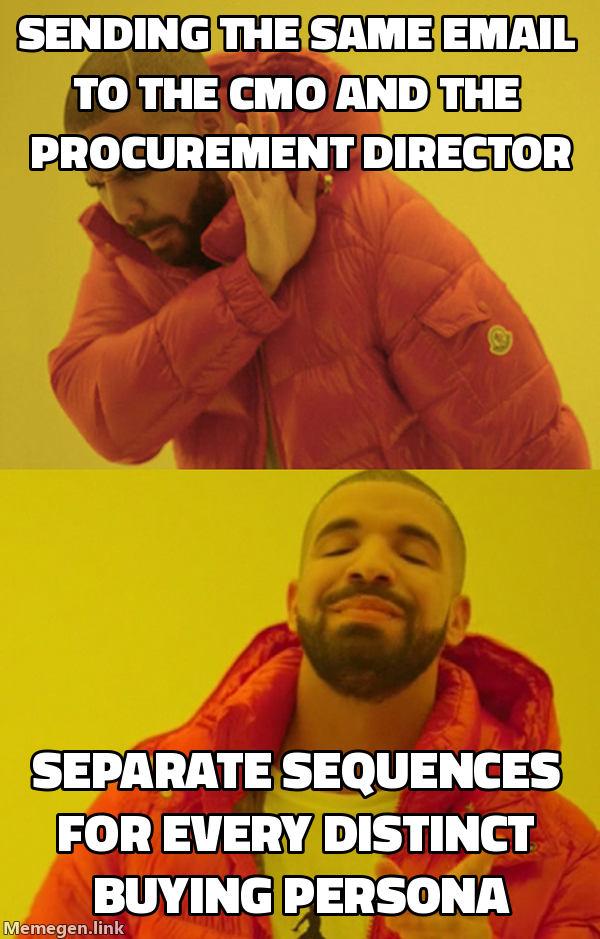 One generic email for all healthcare personas is not a campaign. It is a fast way to get suppressed by every hospital domain you care about.
Who to Target and What to Say
Build separate sequences for each distinct buying persona. The three that tend to convert best for healthcare vendors are:
Procurement and supply chain buyers (Director of Procurement, VP of Supply Chain, CFO at regional health systems). These buyers care about cost reduction, vendor consolidation, and audit trails. Lead with an operational outcome: “teams using this approach have simplified their vendor reconciliation process” is more relevant than any product category name.
Clinical operations and quality (VP of Clinical Ops, Chief Medical Officer, VP of Quality and Safety). These buyers care about workflow friction, compliance burden, and staff time. Lead with the problem, not the solution. Ask a question about a process you know they own.
IT and security (CISO, VP of Health IT, Director of Clinical Informatics). These buyers are gatekeepers as much as buyers. They often co-approve or block vendor decisions. Your outreach to them should acknowledge their role: security posture, integration complexity, and support requirements matter more than the clinical use case.
For each persona, write a separate opening line that references something real about their specific situation. Signal-based personalization means using observable triggers: a new EMR rollout, a recent acquisition, a compliance mandate, a leadership hire. You can surface these signals with a Clay enrichment layer before you write a single word of copy.
Building a List That Won’t Burn Your Domain
A healthcare vendor list built from scraped directories is a deliverability liability. The steps that actually matter:
Start with Apollo or a similar company discovery tool to identify the right health systems and medical groups by size, geography, and specialty focus. Then layer in LinkedIn to verify that your target contacts are active and in-role. Then run every email address through a verification tool before it enters your sending infrastructure.
This three-step process takes longer than downloading a CSV. It is also the only approach that keeps bounce rates low enough to maintain sender reputation. For the mechanics of doing this at scale, the Apollo lead list process covers how to pull and clean a list before any email touches your domain.
Compliance Is a Feature, Not a Box to Check
Healthcare vendors selling into European health systems or US-based organizations with EU subsidiaries need to think about GDPR from the start. The good news: GDPR does not prohibit cold email to business contacts. It requires a legitimate interest basis, a clear opt-out mechanism, and no mixing of outreach data with patient or clinical data.
Running GDPR-compliant cold email outreach is increasingly a competitive advantage in healthcare sales, not just a legal requirement. Buyers in this sector are more attuned to data handling than almost any other vertical. Demonstrating that your outreach is compliant signals that your product is likely compliant too.
Practically, this means: use a dedicated sending domain, suppress opt-outs within 24 hours, document your legitimate interest basis, and keep your prospect data separate from any product or clinical data environments.
Sequence Structure That Works in This Vertical
A 3-step sequence over 14 to 18 days is the reliable structure for healthcare vendor outreach:
Email 1: Short, specific, one problem named, one question asked. Under 100 words.
Email 2 (day 5 to 7): A different angle or a relevant piece of context (a case type, a regulation, a trend). Not a “just following up” copy-paste.
Email 3 (day 12 to 14): A genuine close. Either offer something of value (a brief benchmarking call, a specific insight about their size of health system) or make it easy to say no cleanly.
If you want to add a LinkedIn touchpoint between emails, keep it to a connection request with a short note. No InMail walls of text.
For vendors who want to run this without hiring an internal SDR, a done-for-you cold email setup lets you outsource the infrastructure and copy while keeping a human approval gate on every send.
The One Thing That Changes Results
Every healthcare vendor campaign that books meetings consistently has one thing in common: the first sentence of the email is about the buyer, not the product.
“I noticed [Health System Name] is expanding its ambulatory network” opens differently than “Our platform helps hospitals improve outcomes.” The former earns a second sentence. The latter earns a delete.
Cold email for healthcare vendors is not a volume game. It is a relevance game. Build the right list, personalize by persona and signal, keep sequences short, and stay compliant. That combination books meetings in a vertical where most vendors are not doing any of those things well.
Get the signal tier list in your inbox.
We rank signals from S to D to decide who gets a cold email and who does not. You get the list once. No follow-up emails.
Request received. The list lands in your inbox within 24 hours.
One more step: send the prepared request to [email protected]
FAQ
Is cold email legal for healthcare vendors in Europe?
Yes, B2B cold email to business contacts under GDPR is generally permitted under the legitimate interest basis, provided you target professional emails, offer a clear opt-out, and do not handle patient data in your outreach. Always confirm with legal counsel for your specific jurisdiction.
Who is the right buyer persona for a healthcare vendor cold email campaign?
It depends on deal size and solution type. For clinical software, target VP of Clinical Operations or CMO. For procurement or supply chain tools, target the Director of Procurement or CFO. For compliance solutions, target the Chief Compliance Officer or VP of Risk. Avoid sending the same email to all three.
How many emails should a healthcare vendor sequence have?
Keep it to 3 or 4 steps over two to three weeks. Healthcare buyers are busy and wary of aggressive follow-up. A short sequence with a genuine reason for each touchpoint outperforms a 7-step drip almost every time in this vertical.
What subject lines work for cold email in the healthcare sector?
Short, specific, and non-clinical in tone. Something like 'reducing manual reconciliation at [Hospital Name]' or 'question about your supply chain cycle' outperforms 'Improve Patient Outcomes with Our Platform'. Name the operational problem, not the category.
How do I avoid spam filters when emailing hospital domains?
Use a warmed sending domain (not your primary), keep plain text or minimal HTML, avoid spam trigger words like 'free demo' or 'revolutionary', cap sends at around 30 to 50 per inbox per day, and verify every email address before sending. A bounce rate above 2 to 3 percent is generally considered the threshold where deliverability starts to degrade.
What data sources work best for building a healthcare vendor prospect list?
Apollo for company and contact discovery, LinkedIn Sales Navigator for role verification, and a dedicated email verification tool to clean the list before it ever touches your sending infrastructure. A clean list of 300 verified contacts beats a noisy list of 3,000 unverified ones.

Ahmet Faruk Yilmaz
Founder of Asphia. He builds and runs signal-based B2B outbound engines for lean teams, and has booked meetings with teams at companies across five markets. Writes about cold email, Clay, deliverability, and GTM engineering.
Want this run for you?
Get a free GTM analysis. We show you the exact engine we would build.
Get your free GTM analysis →